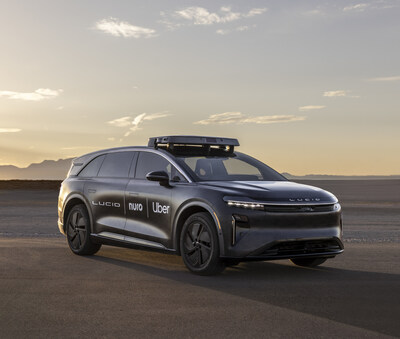
American startup Nuro, which specializes in driverless transportation technologies and is backed by companies such as NVIDIA, Toyota, and Uber, has begun testing its autonomous cars on the streets of Tokyo.
The aim of the tests was to test the capabilities of autonomous driving systems in a complex urban environment that is significantly different from American roads. The Japanese capital is known for its dense traffic, narrow streets and left-hand traffic, which creates additional challenges for self-driving cars.
So far, only a few test cars are operating in Tokyo, and in accordance with Japanese law, instructor drivers are at the wheel, monitoring the operation of the system and can intervene if necessary.
According to CEO Andrew Chapin, testing in such an environment is a kind of “stress test” for autonomous driving technology. Nuro’s ultimate goal is to achieve Level 4 autonomy, where a car is able to fully drive itself in certain conditions without human intervention.
The company plans to use the experience gained during the Tokyo trials to launch a robo-taxi service in San Francisco. The project is being prepared in conjunction with Uber and electric car manufacturer Lucid, and the service is expected to launch this year.
Nuro’s strategy differs from that of some competitors, however. The company aims to create a universal autonomous driving platform that can be adapted to different types of transport and usage scenarios, not just robo-taxis.
Meanwhile, another major player in the autonomous transportation sector, Waymo, is already operating in Tokyo. Its robo-taxis are being tested in collaboration with Japanese taxi fleet Nihon Kotsu and local taxi-hailing service GO, as well as with the support of Toyota.
Nuro has not yet revealed which automakers or transportation operators it plans to partner with in Japan, but the company does not rule out the possibility that its technology could be used not only for passenger transportation but also for other tasks, such as autonomous delivery of goods.
Autonomous transportation is playing an increasingly important role in Uber’s global plans. The company expects to deploy up to 100,000 self-driving cars, including 20,000 robo-taxis created in partnership with Lucid and Nuro, with a phased rollout of the program starting around 2027.