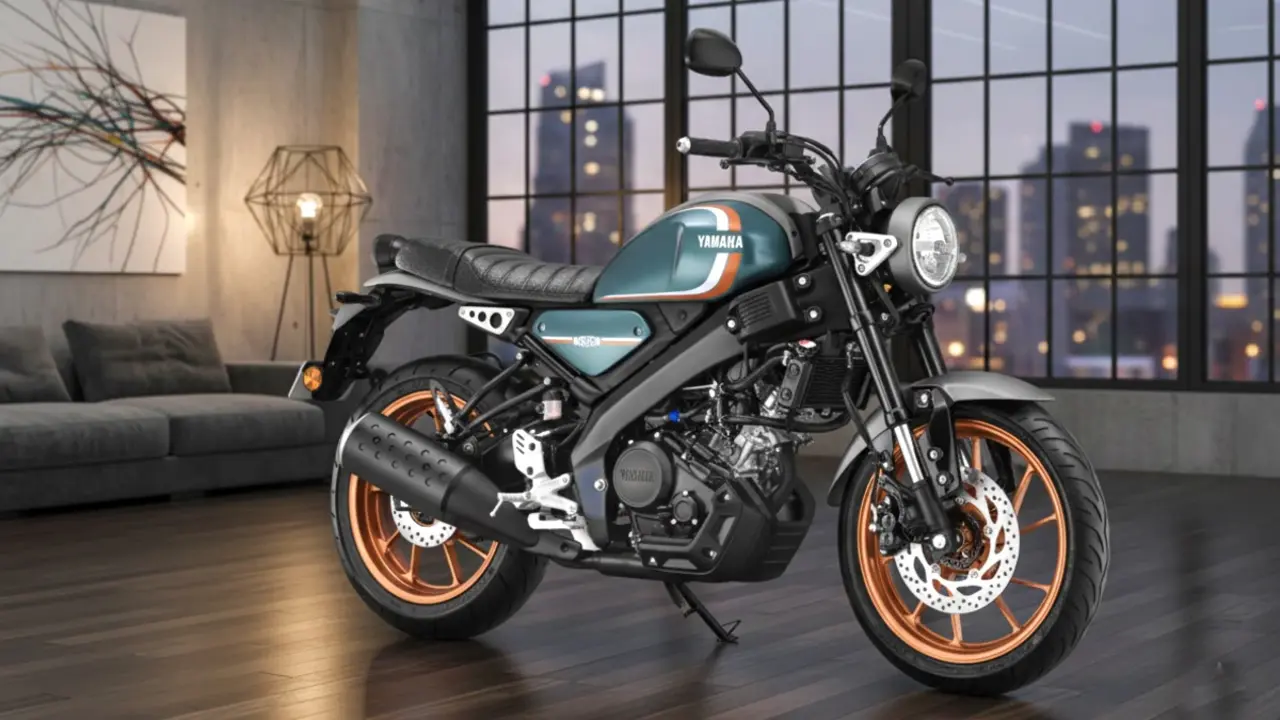
When I first saw the Yamaha XSR 155, I felt like Yamaha had bottled classic motorcycle charm and added modern tech. If you love vintage looks but want modern performance, this bike is built for you. In this post I’ll walk through what makes the XSR 155 special, share real specs and prices, and explain why it could be the perfect city bike or weekend rider.
Design and Modern‑Retro Appeal
The XSR 155 wears a clear neo‑retro look: a round LED headlamp, teardrop fuel tank, a flat single‑piece seat, and clean, minimalist bodywork. I like how Yamaha borrowed cues from their larger XSR family but kept the overall size compact for urban riding. You can personalize the bike with official accessory packs — Yamaha offers Scrambler and Café‑Racer kits in some markets, so you can change the stance without heavy mods.
Practical design notes you’ll appreciate:
- Compact footprint: It fits city lanes easily because of its narrow chassis and light weight.
- Full LED lighting: Gives the retro look a modern twist and improves night visibility.
- Accessory options: Scrambler/Café kits let you change looks quickly and keep resale value.
Engine, Performance, and Real Numbers
The engine is where the XSR 155 blends old and new. It uses a 155cc, liquid‑cooled single with Yamaha Variable Valve Actuation (VVA). That means you get smooth low‑end rideability and a punchy top end when you want it. The India spec lists about 13.5 kW (≈18–19 PS) and roughly 14.2 Nm of torque. It comes with a 6‑speed gearbox and an assist & slipper clutch for smoother, lighter shifts.
Here are some useful numbers and a real example you can trust:
- Launch in India: 11 Nov 2025, introductory price Rs. 1,49,990 (ex‑showroom, Delhi).
- Power: ~13.5 kW (~18–19 PS) — good for city commuting and occasional highway stretches.
- Estimated fuel economy: ~35–40 km/L in real world riding, depending on how aggressively you ride.
If you and I go for a mixed city/short highway ride, expect lively acceleration in town and enough reserve to cruise comfortably on short trips outside the city.
Chassis, Suspension, and Handling
The XSR 155 is built on Yamaha’s Deltabox frame and uses an aluminium swingarm. On current editions you’ll find an upside‑down (USD) front fork and a linked‑type monocross rear shock. That combo gives a stable feel on faster roads and nimble handling at low speeds. On a tight, twisty route I noticed the bike stays composed and confident, even when pushed a bit harder than normal commuting.
Key ride dimensions and weights:
| Spec | Value |
|---|---|
| Weight (curb) | ~134–137 kg |
| Seat height | ~808–810 mm |
| Fuel tank | ≈10–10.4 L |
| Frame | Deltabox frame, aluminium swingarm |
| Suspension | USD front fork, linked‑type rear monocross shock |
Safety, Electronics, and Rider Aids
One reason I trust modern retro bikes like the XSR 155 is the safety tech. For the India launch, Yamaha included dual‑channel ABS and traction control. That’s a serious step up from early regional variants that shipped with single‑channel ABS. The traction control helps if the rear wheel slips during quick throttle changes — useful in wet or uneven road conditions.
The instrument cluster keeps a retro feel while giving modern readouts. You get a digital/LCD console and full LED lighting. In some regions you may find richer displays or smartphone connectivity — so always check the local brochure if you want specific features.
Real‑World Use: Cost, Comfort, and Practicality
When I think about daily use, a few things matter: running cost, comfort, and service. The XSR 155 fits well for riders who want low running costs and an enjoyable ride. With a fuel tank around 10 liters and an estimated economy of 35–40 km/L, you can expect around 350–400 km per tank in mixed city riding.
Maintenance is similar to other 150cc class Yamahas — regular oil changes, chain care, and occasional valve checks. Yamaha’s dealer network, where available, helps with parts and service. The light curb weight makes the bike easy to stop, park, and maneuver, which I find important for urban traffic.
Example use cases:
- If you commute 30 km per day, you’ll refill roughly once a week.
- If you enjoy weekend rides, the upright ergonomics and comfortable seat make 2–3 hour rides doable without major fatigue.
How the Yamaha XSR 155 Compares (Quick Look)
If you’re comparing bikes in this class, the XSR 155 stands out because it mixes retro style with modern features like VVA, assist & slipper clutch, USD forks, and dual‑channel ABS (in some markets). Against rivals such as the Honda CB150R or Yamaha MT‑15, the XSR emphasizes style and a mellow, friendly power delivery rather than outright race focus.
Also Read: Hero’s New Vida VX2 Go EV Breaks Records: 100km Range, Only 90 Paise Running Cost!
Final Thoughts
In short, the Yamaha XSR 155 is a strong pick if you want classic looks without sacrificing modern tech. It launched in India on 11 Nov 2025 at an introductory price of Rs. 1,49,990, and brings a compelling mix of style, practicality, and safety. With a lively 155cc VVA engine, a 6‑speed box with assist & slipper clutch, Deltabox chassis, USD fork, and in some markets dual‑channel ABS plus traction control, it’s built to please both city riders and weekend explorers.
If you love the retro vibe but want the confidence of modern features, I think you’ll be charmed by the XSR 155 — it truly wins hearts by offering looks and performance in equal measure.